
Lipoedema – Compression Strategies to Support Long-Term Management
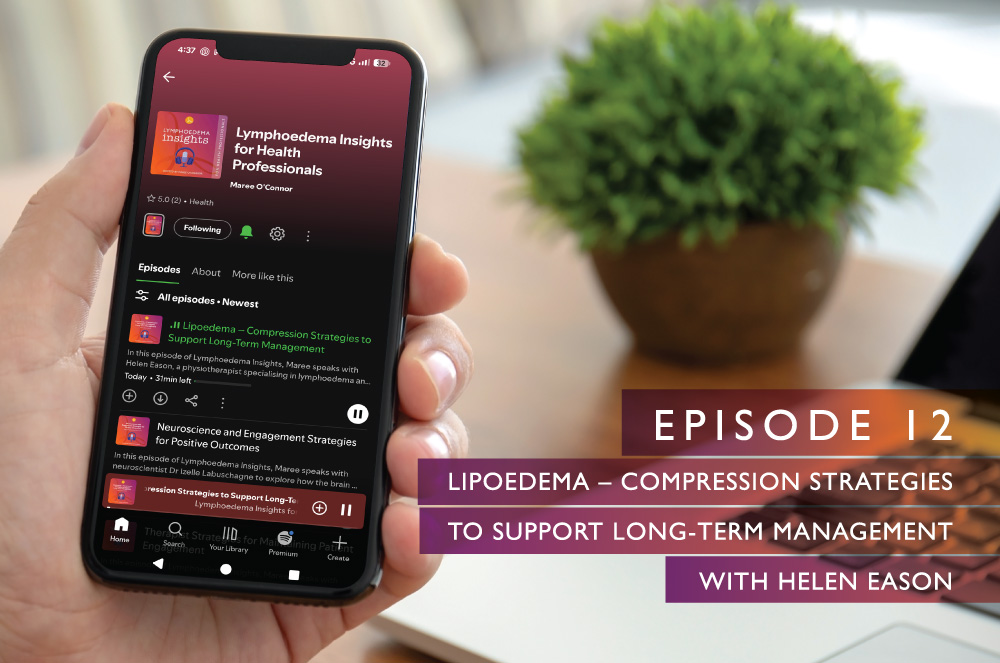
In this episode of Lymphoedema Insights, Maree speaks with Helen Eason, a physiotherapist specialising in lymphoedema and lipoedema management. Together, they explore the role of compression therapy in lipoedema care, highlighting the need for individualised assessment rather than a one-size-fits-all approach.
The conversation unpacks when compression may be appropriate, when it may be deferred, and how factors such as inflammation, pain, and metabolic health influence decision-making. Helen also discusses the impact of misinformation, particularly from social media, and shares practical ways clinicians can support patient understanding and engagement.
About our guest speaker – Helen Eason
Helen Eason is a highly experienced physiotherapist specialising in oncology rehabilitation and lymphoedema and lipoedema management.
With over 25 years of experience, Helen is an Australian Physiotherapy Association–titled physiotherapist, an Australasian Lymphology Association–accredited lymphoedema therapist, and a PhD candidate at the University of Sydney researching lipoedema assessment. She was also among the first clinicians in Australia trained in Fluoroscopy Guided Manual Lymphatic Drainage (FG-MLD).
As Founder and Director of Helen Eason Physiotherapy, Helen is passionate about improving access to best-practice care, supporting patients to restore function, confidence, and quality of life. She is also a respected educator and speaker at national and international conferences.
Sponsor
This podcast is proudly supported by Haddenham Healthcare. Lipoedema presents unique challenges for compression management, including pain sensitivity, disproportionate limb shape, and long-term wear tolerance. Haddenham supports clinicians with a range of compression solutions designed for lipoedema management, including adjustable wraps, custom-made garments, and night-time compression options that support comfort, function, and adherence.
You can find more information at www.hadhealth.com.au
🎧 Listen to Episode 12
Key points discussed
- Compression therapy in lipoedema is not one-size-fits-all and should be guided by thorough individual assessment rather than applied routinely.
- Determining the presence of oedema (including coexisting lymphoedema) is critical, as this influences whether compression is indicated and at what level.
- In some cases, clinicians may prioritise nutrition, exercise, and metabolic health before introducing compression, particularly where inflammation and pain are primary drivers.
- Pain in lipoedema is often linked to inflammation rather than fluid alone, requiring a broader, multimodal management approach.
- Patient misconceptions—often shaped by social media or previous experiences—can significantly impact engagement and need to be explored and addressed early.
- Education should be tailored, explaining the specific purpose of compression (e.g. oedema management, pain reduction, contouring) for each individual.
- Garment selection (fabric, class, style, layering) should be individualised based on presentation, tolerance, and lifestyle considerations.
- A “compression wardrobe” approach can provide flexibility, allowing patients to adapt garments to different needs and contexts.
- Movement is an important component of management, particularly when using compression to support circulation and reduce inflammatory load.
- Barriers such as cost, comfort, and usability can limit adherence, highlighting the need for practical, patient-centred solutions.
- Alternative or adjunct options (e.g. pumps, nighttime garments) may support those unable to tolerate standard compression.
- Ongoing research, improved garment design, and potential funding support are important for advancing care and access for people with lipoedema.
Three practical tips from the discussion:
1. Start with individual assessment, not assumptions
Before introducing compression, determine whether oedema is actually present and whether there is a lymphatic component. This helps guide not only if compression is needed, but also the type and level prescribed, avoiding unnecessary or poorly tolerated interventions.
2. Address patient understanding early
Ask patients what they already know about lipoedema and compression, particularly information gathered from social media or past experiences. Unpacking misconceptions upfront can improve trust, engagement, and adherence to treatment recommendations.
3. Use a flexible, tailored approach to compression
Think beyond a single garment. Consider factors such as pain, inflammation, lifestyle, and tolerance when selecting compression, and introduce options gradually (e.g. lighter classes, layering, or different garment styles). A “compression wardrobe” can help patients adapt to different situations and improve long-term use.
Catch up
🎧 Listen to all episodes of Lymphoedema Insights for Health Professionals available on Spotify and Apple Podcasts


