
Looking Beyond the Swelling
What guided clinical decision-making in this complex head and neck lymphoedema case?
Head and neck lymphoedema is a common consequence of head and neck cancer treatment, yet its impact often extends far beyond visible swelling. Patients may experience a complex combination of fibrosis, pain, altered appearance, communication difficulties, swallowing challenges and reduced participation in everyday activities.
Managing these presentations can be particularly challenging for clinicians. Treatment decisions often need to balance symptom burden, function, patient priorities and quality of life, while working within an evidence base that continues to evolve.
This case study, shared by physiotherapist Dr Aoife McGarvey and her patient John, explores the clinical reasoning behind managing a complex presentation of head and neck lymphoedema and highlights the importance of focusing on outcomes that matter most to the individual.
When John returned to physiotherapist Dr Aoife McGarvey three years after treatment for recurrent head and neck cancer, swelling was only part of the problem.
The real challenge was deciding where to start.
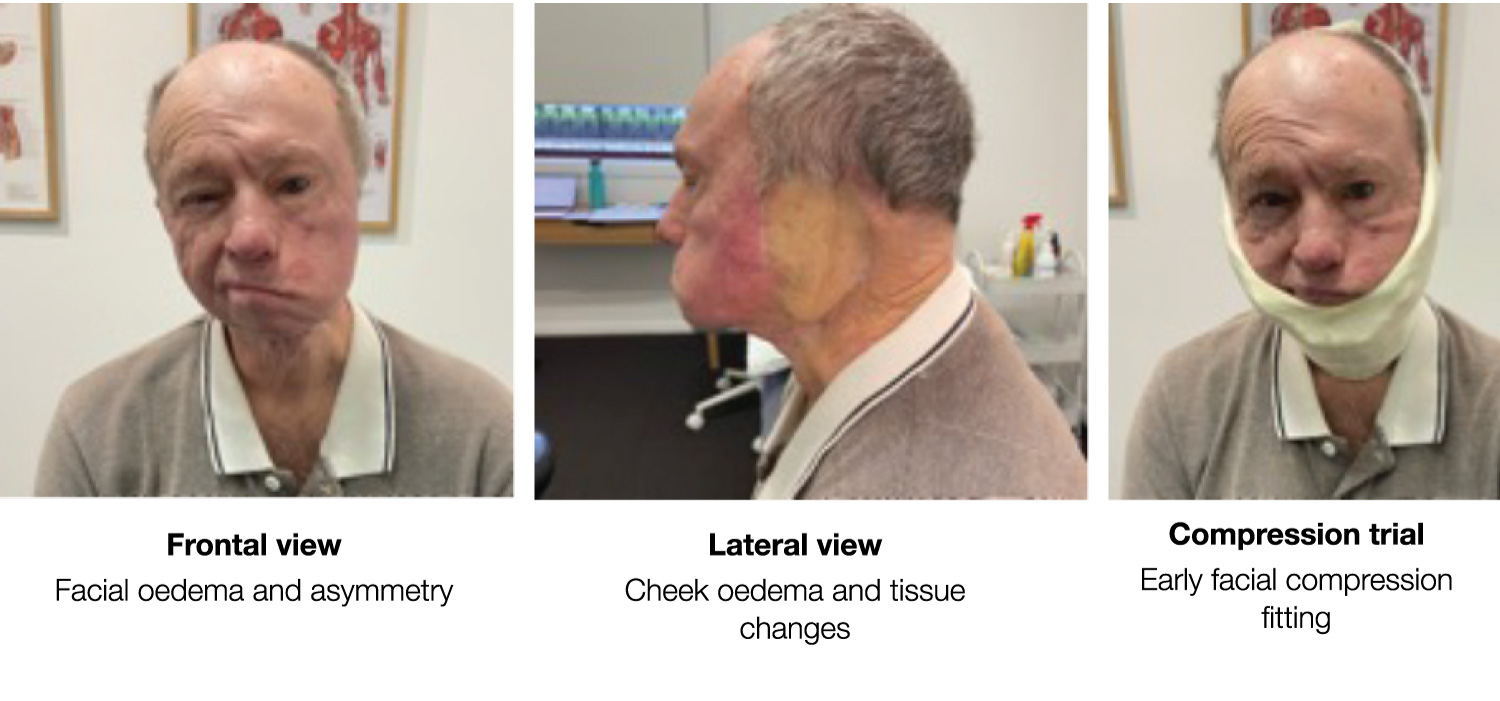
Figure 1. John presenting with complex head and neck lymphoedema following treatment for recurrent head and neck cancer. The combination of facial oedema, fibrosis, surgical changes and functional impairment highlights the multifaceted challenges associated with long-term management.
John was living with:
- Severe neck fibrosis
- Cheek and infraorbital oedema
- Jaw pain
- Trismus
- Internal lymphoedema
- Speech and eating difficulties
- Fatigue
- Loss of work and social participation
Like many people living with head and neck lymphoedema, the challenges extended far beyond appearance.
“The swelling put pressure on my lower jaw and the area below my eye. The instability of the jaw restricted chewing and affected my speech.”
For Aoife, the first step was deciding which problems required attention first.
Decision Point 1: Rule Out Something More Serious
Before addressing lymphoedema, Aoife needed to determine whether John’s increasing pain and swelling could represent disease recurrence or osteoradionecrosis.
Given his history of recurrent squamous cell carcinoma and persistent symptoms, these possibilities needed to be excluded before treatment could proceed.
Fortunately, recent imaging confirmed there was no evidence of disease recurrence, allowing management to focus on the lymphoedema and fibrosis.
Clinical Reflection
Progressive swelling and pain should never automatically be assumed to represent lymphoedema progression. Red flags must remain front of mind when assessing head and neck cancer survivors.
Decision Point 2: Follow the Patient’s Priorities
Assessment revealed multiple impairments, including severe fibrosis, trismus, jaw deviation, internal lymphoedema and facial oedema.
Yet John’s priorities were remarkably clear.
- He wanted to:
- Reduce jaw pain
- Improve eye opening
- Make eating easier
- Stop biting the inside of his cheek
For John, the impact of lymphoedema extended well beyond swelling.
The increasing symptoms had contributed to his decision to stop working and give up golf – activities that had provided both purpose and social connection.
Although conscious of the visible changes following treatment, John was more concerned about how the condition was affecting everyday function.
“I try not to let the physical changes affect me emotionally. The bigger issue is the impact on speaking, eating and comfort.”
Rather than focusing solely on reducing swelling, Aoife centred treatment goals around improving comfort, function and quality of life.
Clinical Reflection
Patients often define success differently from clinicians. Understanding what matters most to the individual can reshape treatment priorities and improve engagement.
Decision Point 3: When Existing Strategies Stop Working
John had previously responded well to treatment and compression.
However, over time his cheek and infraorbital oedema progressed despite ongoing self-management. The ready-to-wear compression garment that had once been effective no longer adequately controlled the facial oedema and appeared to be directing swelling towards the eye.
Treatment initially focused on improving tissue mobility, comfort and lymphatic drainage through:
- Low level laser therapy
- Deep oscillation therapy
- Manual techniques
- Simplified self-lymphatic drainage
- Neck mobility exercises
- Fibrosis management
Although neck comfort improved, the cheek and eye swelling remained.
This prompted a reassessment of whether the existing compression strategy still matched the presentation.
Clinical Reflection
Compression strategies may need to evolve as oedema patterns change. Regular reassessment helps identify when a previously effective approach is no longer achieving the desired outcomes.
Decision Point 4: Is a Facial Compression Mask Worth Trying?
Facial compression presents unique challenges.
For John, the decision was not simply whether the garment might reduce swelling.
It was whether the benefits would outweigh the practical and emotional challenges of wearing a highly visible garment.
Aoife explored questions including:
- Would John actually wear it?
- Would it affect eating or speaking?
- Would it trigger memories of cancer treatment?
- Would it worsen jaw discomfort?
- Could the cost be justified?
Funding support from a local charity helped overcome a significant financial barrier, allowing John to trial a made-to-measure facial compression garment.
John ultimately decided the potential benefits justified a trial.
Figure 2. Progression of custom facial compression management. Images provided by Dr Aoife McGarvey demonstrating the initial facial compression garment, early garment review, and subsequent modification to improve fit around the left eye.
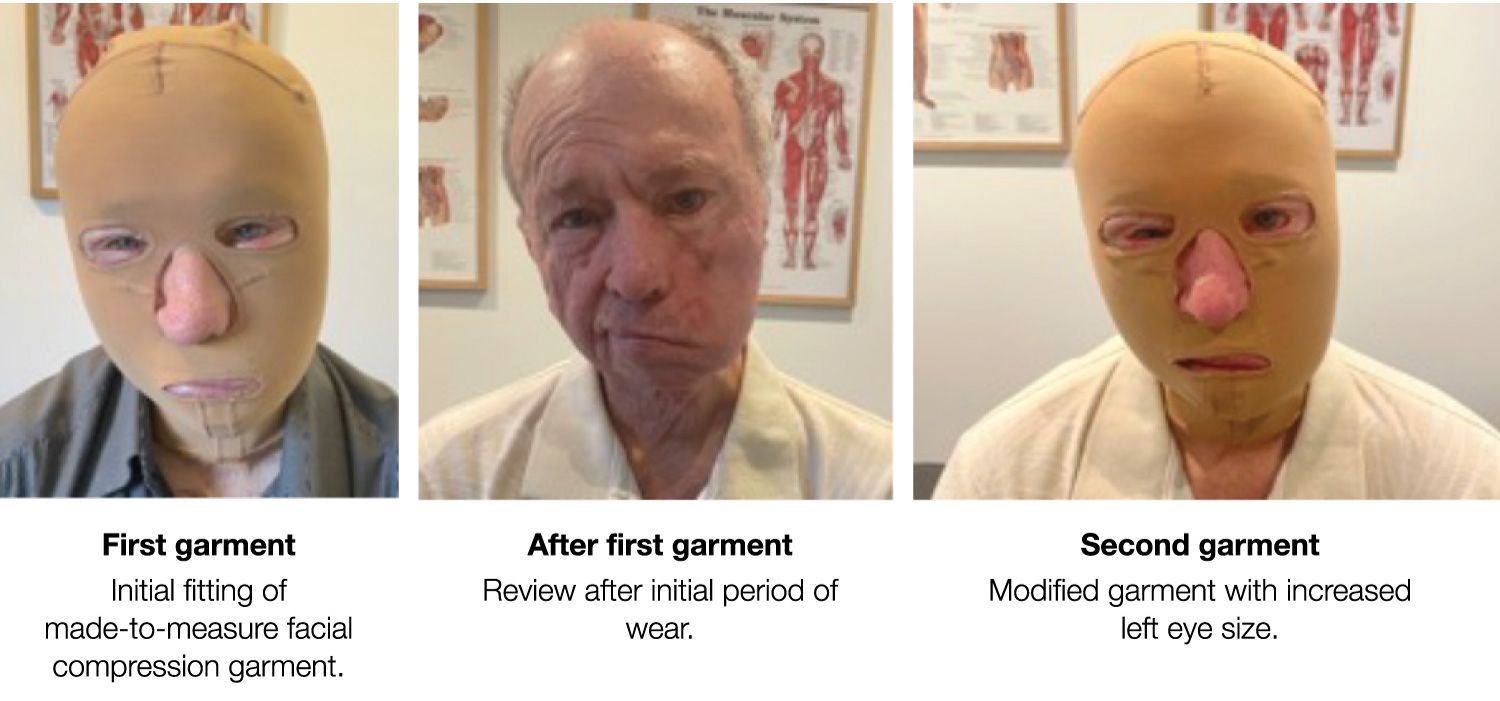
The garment was introduced gradually, allowing careful monitoring of comfort, function and symptom response.
Clinical Reflection
Successful compression is not simply about garment selection. Acceptance, comfort, lifestyle considerations and psychosocial factors all influence whether a garment becomes a realistic long-term option.
Decision Point 5: How Do We Define Success?
The custom facial garment did not solve every problem.
The severe fibrosis remained challenging and ongoing management was still required.
However, the outcomes that mattered most to John improved:
✓ Reduced eye swelling
✓ Improved eye opening
✓ Reduced jaw discomfort
✓ Less cheek biting
✓ Improved comfort when eating and speaking
“Since using the full compression mask, the impact on my eye has reduced. The amount of swelling around my jaw has also decreased.”
Importantly, John viewed success realistically.
“This swelling is only one part of the problems I have to deal with. Even a small improvement overall is a positive.”
While not every symptom resolved, meaningful improvements in comfort and function had been achieved.
Clinical Reflection
Success in complex head and neck lymphoedema management is not always measured by complete resolution of swelling. Improvements in function, comfort and participation in daily life can be equally important outcomes.
Aoife’s Clinical Pearls
Start with what bothers the patient most
Head and neck lymphoedema rarely occurs in isolation. Identifying the symptoms that have the greatest impact on comfort, function and quality of life can help prioritise treatment and improve engagement.
Keep self-management achievable
Long-term self-management can be demanding. Simplifying self-lymphatic drainage techniques and integrating them into existing daily routines may improve adherence over time.
Measure outcomes regularly
Evidence for head and neck lymphoedema management remains limited. Combining objective measures with patient-reported outcomes helps determine whether an intervention is making a meaningful difference.
Consider psychosocial impacts when selecting compression
Compression decisions should extend beyond swelling management. Appearance, comfort, communication, lifestyle and previous treatment experiences can all influence whether a garment is accepted and used consistently.
Work closely with the multidisciplinary team
Collaboration with speech pathologists, surgeons and other head and neck cancer clinicians can support earlier identification of lymphoedema and provide more comprehensive care.
Accept that not every problem can be fully resolved
In chronic and complex presentations, success may not mean eliminating oedema or fibrosis. Meaningful improvements in comfort, function and participation can still have a significant impact on quality of life.
John’s Advice for Patients
“If I had sought advice and treatment earlier, it would have reduced the impact and scale of the problem.
Surgeons and oncologists start the journey, but professionals like physiotherapists can have a major impact on your quality of life.”
Acknowledgements
LES thanks Dr Aoife McGarvey and John for generously sharing their expertise and experiences for this article. Their willingness to provide both clinician and patient perspectives offers valuable insights into the challenges and opportunities involved in managing head and neck lymphoedema.
Contributor Disclosure: Dr Aoife McGarvey is the owner and director of Physio Living in Newcastle, NSW. She has no financial affiliation with Lymphoedema Education Solutions, Essity, or any compression garment manufacturer mentioned in this article.

Thank you to Essity for sponsoring this article.


