
Working with Suppliers in Lymphoedema Management
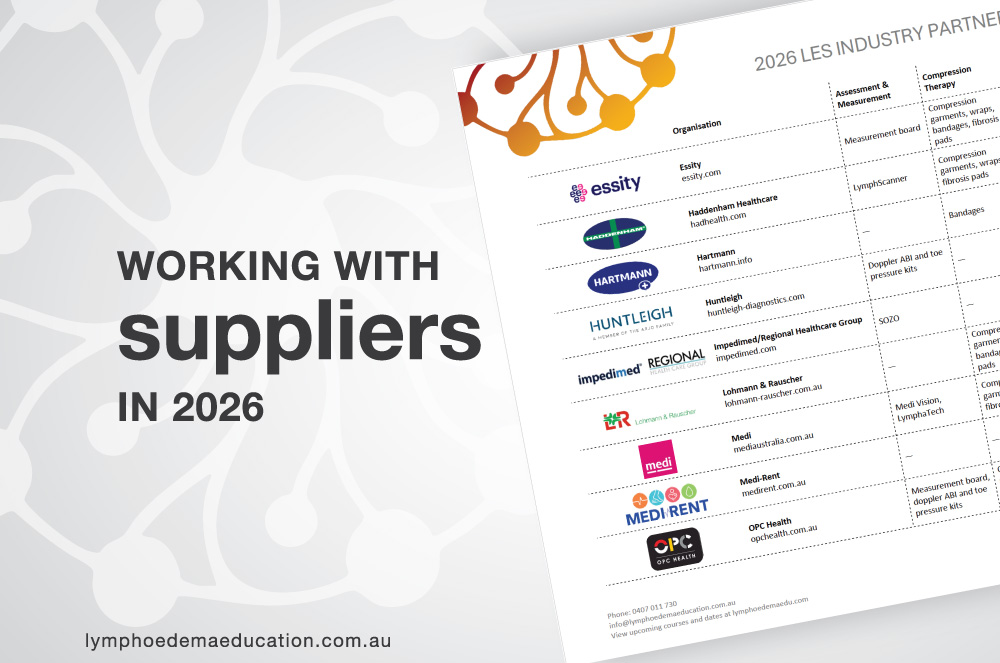
Effective lymphoedema management relies on a combination of clinical expertise, appropriate product selection, and access to a range of therapeutic options.
LES acknowledges and thanks our 2026 Industry Partners for their contribution to supporting clinicians across multiple areas of care—including assessment and measurement, compression therapy, compression aids, skin and wound care, and therapeutic devices
To support clinicians in navigating these options, we have developed a partner overview table (downloadable below). This resource highlights each organisation’s areas of focus to help guide clinical decision-making, compare available options, and direct enquiries efficiently.
This guide complements that resource by outlining how and when to engage with suppliers as part of comprehensive lymphoedema management.
Using the Partner Table
The table can be used to:
- Identify suppliers aligned with your clinical needs
- Compare product and service categories across organisations
- Direct enquiries based on area of interest (e.g. assessment, compression, wound care, IPC devices)
- Increase awareness of available tools and adjuncts to support patient care
Engaging with Suppliers
Effective lymphoedema management is strengthened by knowing when and how to engage with suppliers. The goal is not to hand over decision-making, but to draw on product and technical expertise to support clinical reasoning.
When to reach out
Consider contacting a supplier when:
- You are selecting a garment, device, or product for a complex presentation
- A patient is experiencing fit, comfort, or tolerance issues
- You are unsure which product range, tool, or variation is most appropriate
- A product is not performing as expected (e.g. slipping, rolling, ineffective outcomes)
- You need clarification on custom options, modifications, or alternatives
- You require support with assessment tools or adjunct therapies (e.g. IPC, diagnostic devices)
- There are questions around ordering processes, lead times, or availability
What to ask
Targeted questions can help you get the most useful information quickly:
- “What options best suit this presentation and clinical need?”
- “Are there alternative materials, designs, or technologies that may improve tolerance or outcomes?”
- “What are the key differences between these product ranges or devices?”
- “Are there known issues or considerations with this option?”
- “What care or maintenance requirements are critical for performance?”
What to share
Providing clear clinical context improves the quality of support you receive:
- Limb presentation and swelling pattern
- Skin condition and sensitivities
- Patient function, mobility, and daily demands
- Previous products or therapies trialled and outcomes
- Specific challenges (e.g. donning, heat, discomfort, adherence)
Building effective relationships
Strong clinician–supplier relationships are built on:
- Clarity – sharing relevant clinical information
- Curiosity – asking questions to deepen understanding of available options
- Consistency – aligning messaging between clinician, supplier, and patient
- Professional judgement – integrating supplier input with clinical reasoning
A balanced approach
Suppliers provide valuable product and technical knowledge—but clinical decision-making remains with you.
The most effective outcomes occur when:
- Clinical expertise guides the “why”
- Supplier knowledge supports the “how”


