
Head and Neck Lymphoedema: Collaboration, Care and Clinical Practice
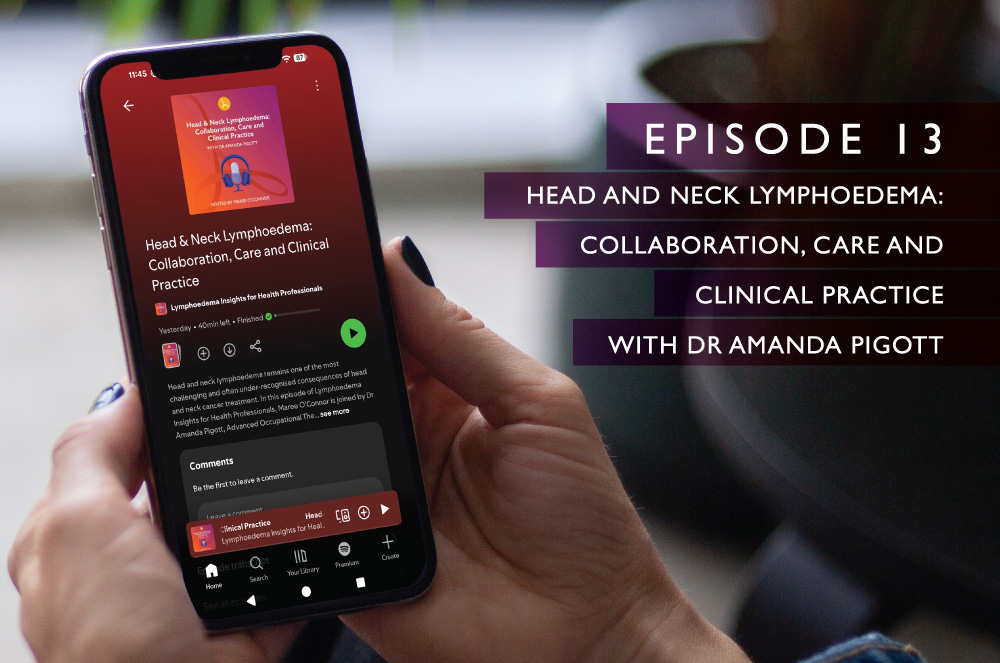
Head and neck lymphoedema remains one of the most challenging and often under-recognised consequences of head and neck cancer treatment. In this episode of Lymphoedema Insights for Health Professionals, Maree O’Connor is joined by Dr Amanda Pigott, Advanced Occupational Therapist and Clinical Specialist in Cancer-Related Lymphoedema, to explore the evolving role of the lymphoedema practitioner in this complex area of care. Together they discuss practical approaches to multidisciplinary collaboration, strategies for building referral pathways, supporting patient self-management, and maintaining evidence-informed practice. Drawing on extensive clinical experience, Amanda shares valuable insights into the functional, psychosocial and long-term impacts of head and neck lymphoedema, providing clinicians with practical ideas to strengthen assessment, advocacy and patient-centred care across a range of practice settings.
About our guest speaker – Dr Amanda Pigott
Amanda is an Advanced Occupational Therapist and Clinical Specialist in lymphoedema at Princess Alexandra Hospital in Brisbane, where she works within the cancer-related lymphoedema service. She has more than 25 years’ experience as an occupational therapist, with extensive expertise in oedema and lymphoedema management across cancer, acute care and rehabilitation settings.
Amanda has led multidisciplinary lymphoedema services, trained allied health professionals across Australia, and continues to contribute to advancing practice through education, research and clinical leadership. She is an Honorary Research Fellow at the University of Queensland and remains actively involved in the Australasian Lymphology Association through its research and conference committees.
Sponsor
This episode of Lymphoedema Insights for Health Professionals is proudly supported by Essity. Their JOBST JoViPak Chin Strap is designed to manage swelling of the neck, mandible, and face, while comfortably accommodating the ears. When paired with the JoViPak Neck Pad, clinicians can achieve more effective compression for bilateral oedema, including challenging areas around and behind the ears.
Adjustable, comfortable, and suitable for overnight use, these solutions support patient compliance while helping to reduce swelling and address fibrotic tissue. These products form part of Essity’s broader JOBST portfolio, providing clinicians with comprehensive options for lymphoedema management across a range of presentations.
To explore the full range and access clinical resources, visit jobst.com.au.
🎧 Listen to Episode 13
Key Takeaway Messages
- Head and neck lymphoedema is more than swelling.
Its impact often extends to speech, swallowing, appearance, movement, social participation, work, and quality of life. Assessment should consider both physical and psychosocial consequences.
- Patient education and self-management are central to successful care.
Treatment cannot rely solely on clinician-delivered interventions. Helping patients understand their condition, develop realistic expectations, and build self-management skills is a core part of the lymphoedema practitioner’s role.
- Individualise treatment rather than applying a standard protocol.
Management should be tailored to the person’s symptoms, goals, level of distress, and capacity to participate in treatment. The most appropriate intervention is not always the most intensive intervention.
- Become an active member of the multidisciplinary team.
Understanding the roles of other team members, attending MDT meetings where possible, and communicating outcomes can strengthen collaboration and improve patient care.
- Advocate for the role of lymphoedema management.
Awareness of head and neck lymphoedema remains variable, even among some medical and surgical colleagues. Practitioners have an important role in promoting understanding of the condition and the benefits of treatment.
- Build referral pathways before you need them.
Whether working in public or private practice, visibility matters. Engaging with professional networks, communicating with referrers, providing feedback, and participating in local cancer care activities can strengthen referral relationships.
- Stay current in both lymphoedema and head and neck cancer care.
Evidence-informed practice requires understanding not only lymphoedema management but also evolving cancer treatments and their long-term consequences.
- Learning is strengthened through discussion and sharing.
Discussing cases, reflecting on outcomes, presenting clinical experiences, and sharing new evidence with colleagues are powerful ways to translate knowledge into practice.
- Small improvements can have a significant impact.
Even when complete resolution is not possible, reducing symptoms, improving function, supporting participation, or helping a patient feel more like themselves can be highly meaningful outcomes.
- Early recognition and intervention matter.
Head and neck lymphoedema can have substantial functional and psychosocial consequences. Identifying concerns early and connecting patients with appropriate support may improve long-term outcomes.
One Action to Take This Week
Identify one professional connection that could strengthen your head and neck lymphoedema referral pathway
Whether that’s attending an MDT meeting, contacting a local head and neck service, introducing yourself to a speech pathologist, dietitian, or cancer nurse, or exploring resources from a relevant professional organisation. Small steps in collaboration often lead to better outcomes for patients.
Catch up
🎧 Listen to all episodes of Lymphoedema Insights for Health Professionals available on Spotify and Apple Podcasts


