November 2026 LES Actions for Engagement
Connected Care: Chronic Oedema in Aged Care Through Collaboration
Chronic oedema in older people is often managed across a complex care environment. A person may rely on nurses, care workers, allied health professionals, family members, GPs and other health providers to support daily routines, monitor changes and help implement treatment recommendations.
In aged care, the success of an oedema management plan can depend as much on communication and consistency as on the treatment itself. Compression may need to fit around personal care routines. Skin changes may first be noticed by care staff. Mobility, cognition, dexterity, frailty and comorbidities may affect what is practical from day to day.
This month’s Actions for Engagement focuses on connected care: how clinicians can strengthen collaboration around chronic oedema management in older people. The five actions encourage reflection, collaboration, evidence-informed practice, professional growth and practical review, with an emphasis on making care plans workable across the people and settings involved.
Each action is designed to support small changes that may improve continuity, communication and day-to-day care.
Five Ideas. Practical Prompts. Use What Fits.
This month, we invite you to consider five practical actions that can strengthen collaborative chronic oedema care in aged care settings.
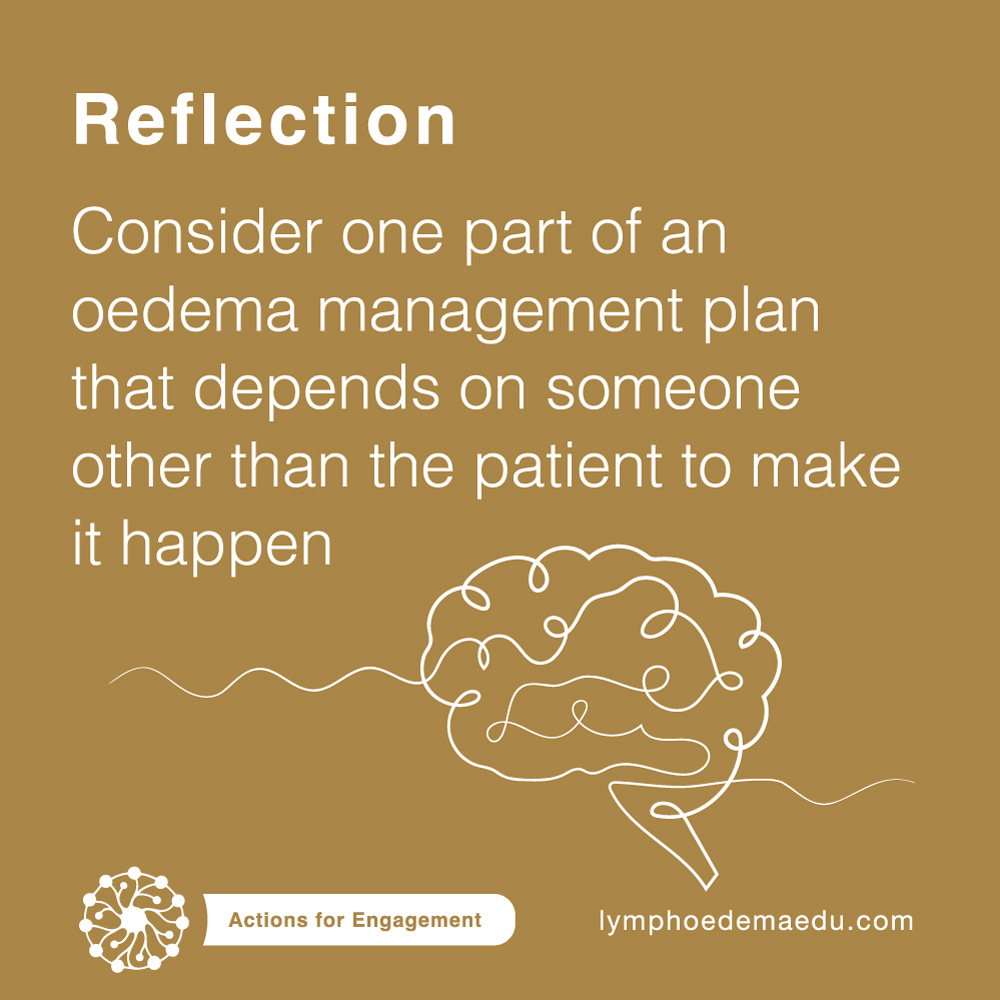
Reflection
Consider one part of an oedema management plan that depends on someone other than the patient to make it happen.
For example, compression may rely on care staff being available at the right time, or regular skin checks may depend on information being passed between shifts.
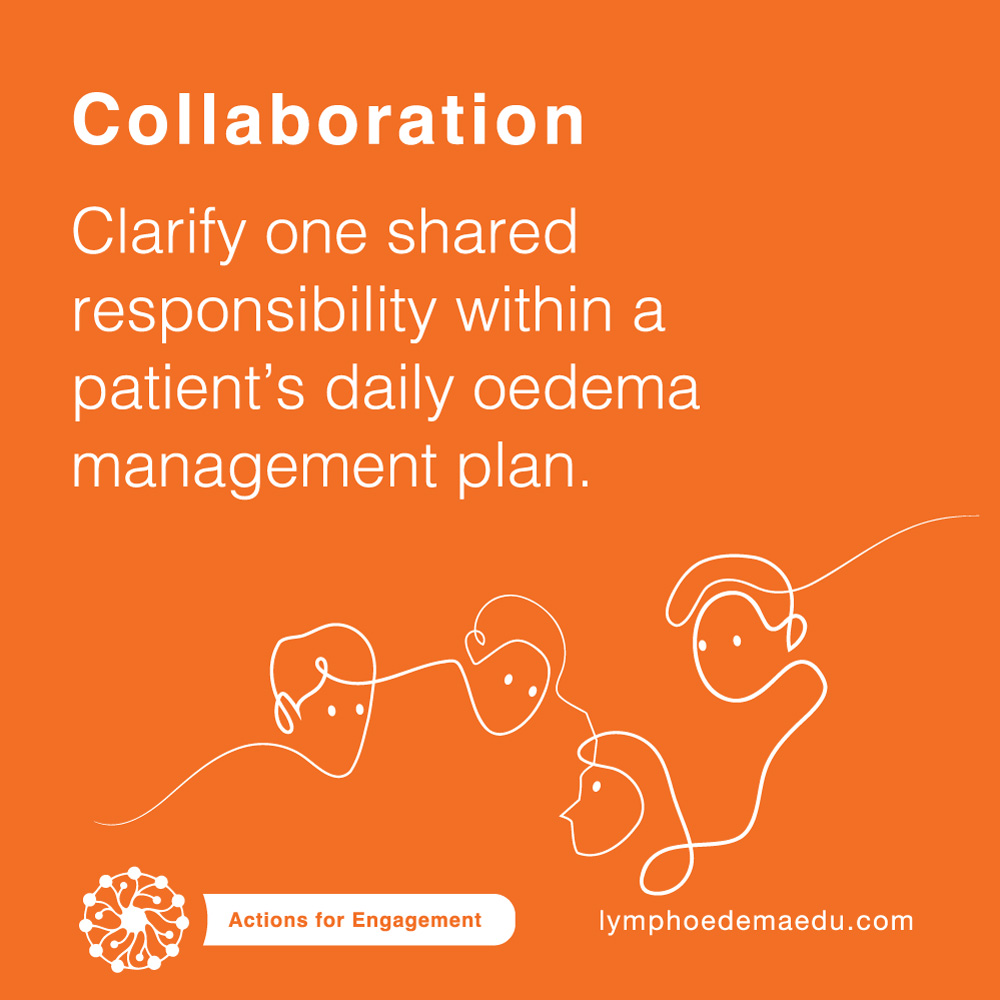
Collaboration
Clarify one shared responsibility within a patient’s daily oedema management plan.
For example, confirm who applies or removes compression, who monitors skin changes, what should be documented and who should be contacted if swelling or skin integrity deteriorates.
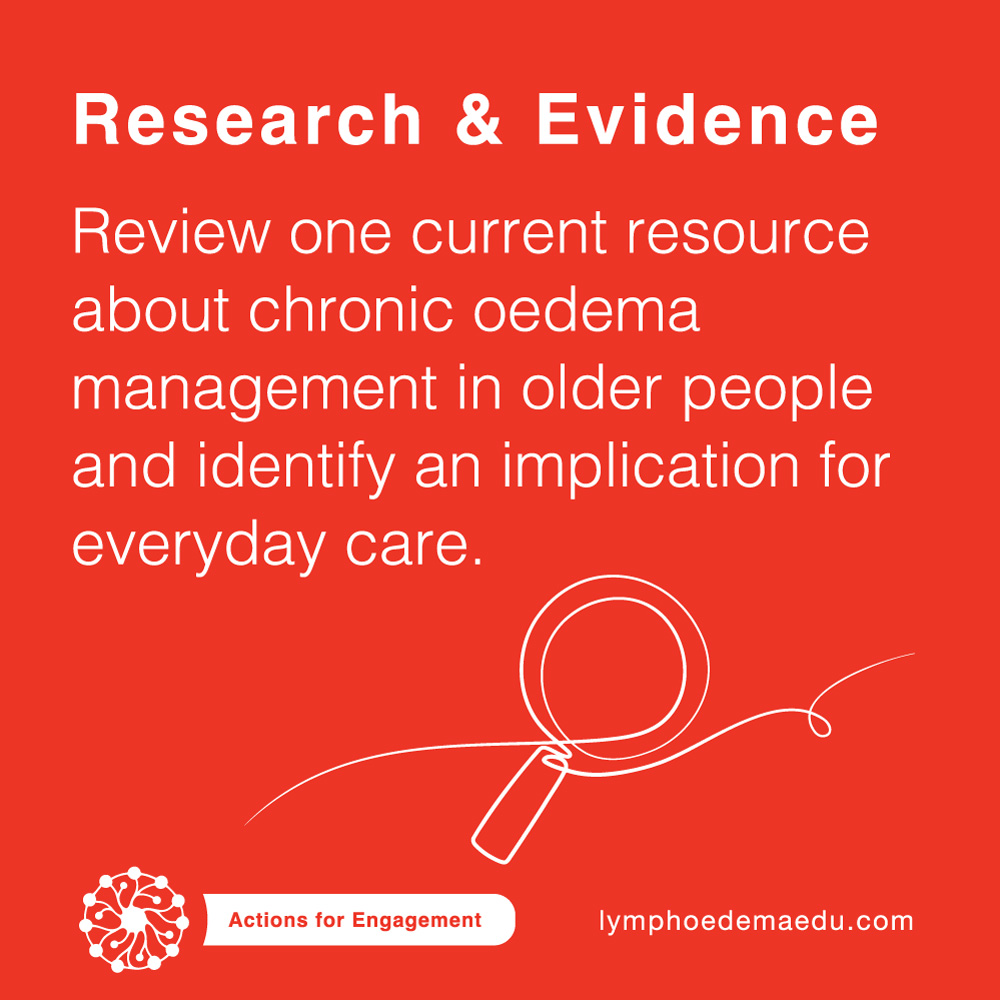
Evidence
Review one current resource about chronic oedema management in older people and identify an implication for everyday care.
For example, consider how frailty, mobility, skin vulnerability, comorbidities or compression tolerance may influence the way a management plan is implemented.
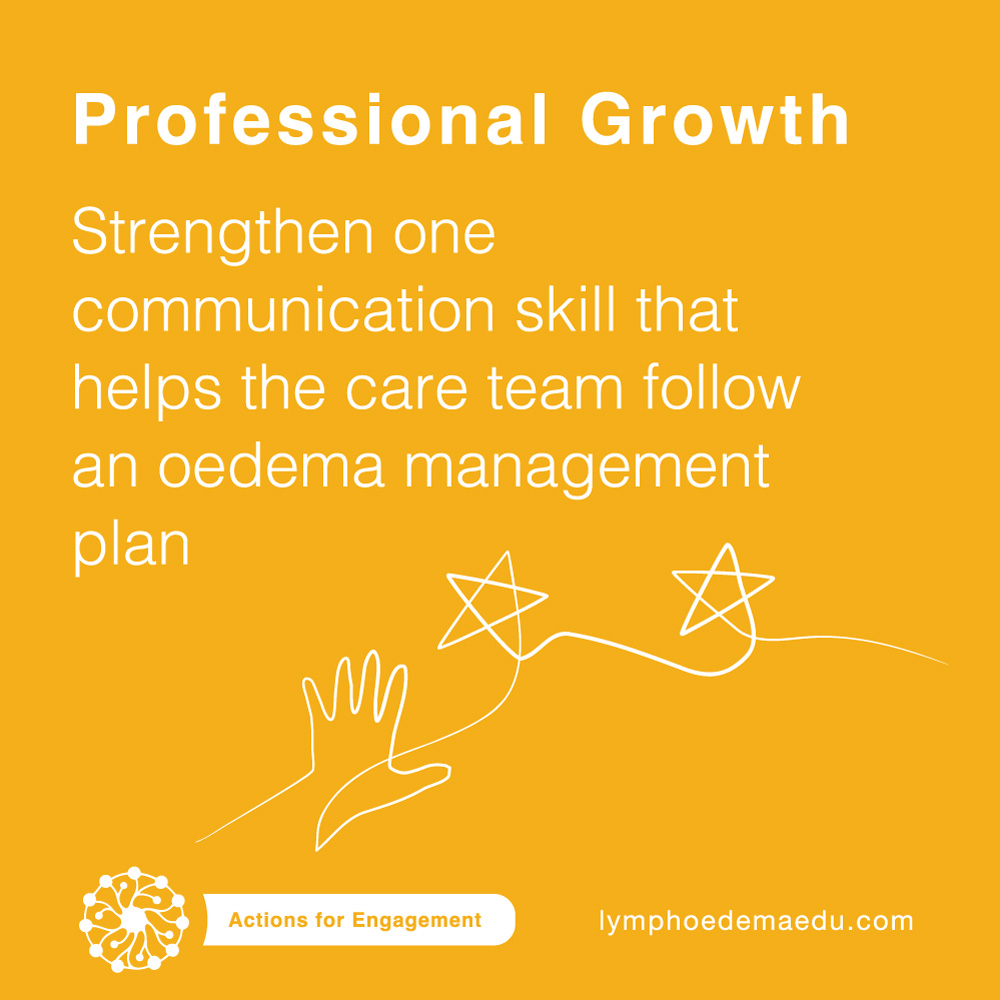
Professional Growth
Strengthen one communication skill that helps other members of the care team carry out an oedema management plan confidently.
For example, practise explaining a compression routine, skin-monitoring requirement or escalation point in clear, practical language that can be followed across different staff and shifts.
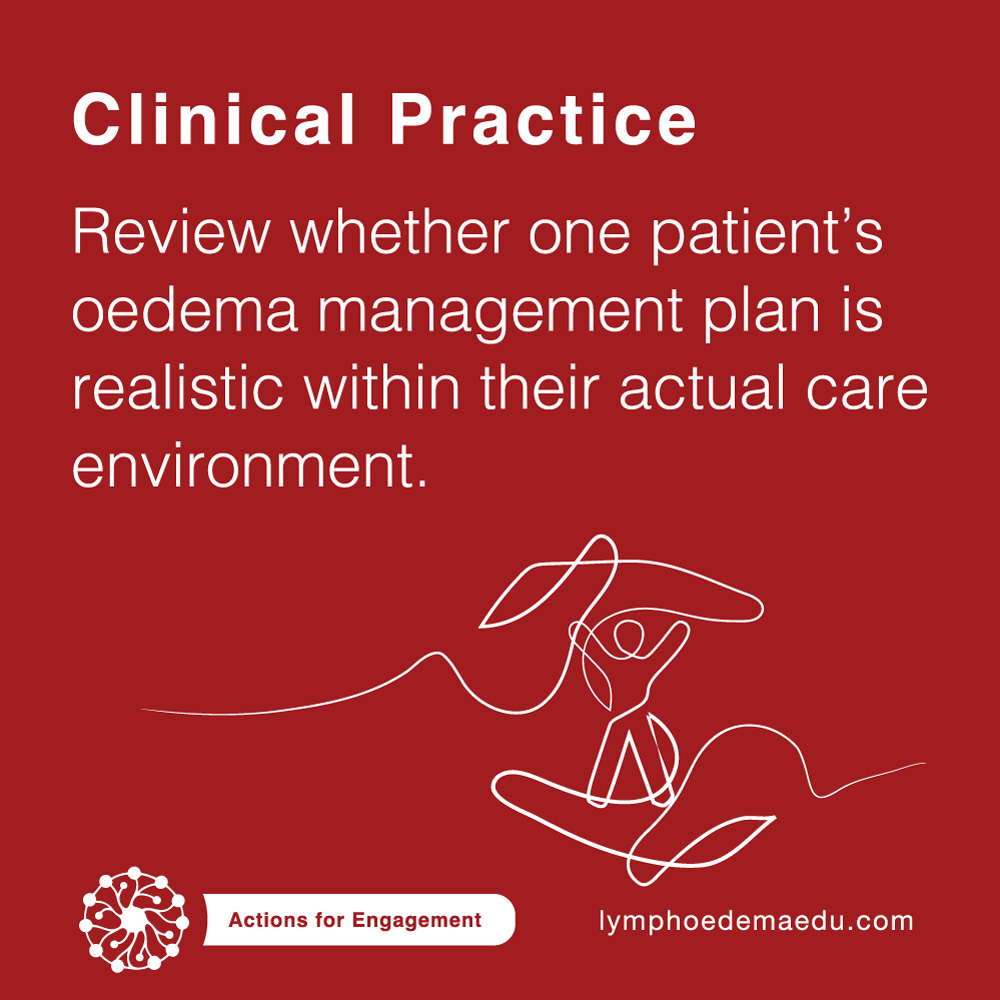
Clinical Practice
Review whether one patient’s oedema management plan is realistic within their actual care environment.
For example, consider whether compression timing, garment choice, positioning, exercise or skin care can be consistently supported within staffing routines, mobility limitations and the person’s daily preferences.
These actions are not intended as a checklist. Select the prompt that is most relevant to your current practice, discuss it with colleagues, or use it as a starting point for team reflection.
Explore further by connecting these prompts with current evidence, patient and family feedback, clinical discussions and learning opportunities related to chronic oedema in older people.
Check back monthly as new Actions for Engagement resources and practical prompts are added to support clinical practice.
In aged care, an effective oedema management plan is rarely carried by one person alone. Clear responsibilities, realistic routines and shared understanding can make care more consistent and sustainable.
See it. Share it. Start a conversation.
Each image below highlights one of the November Actions for Engagement prompts. We invite you to share them with colleagues, display them within your workplace, use them as discussion starters during team meetings, or revisit them throughout the month as reminders of the importance of connected care.