
Aged Care Part 2 | Managing chronic oedema in residential aged care
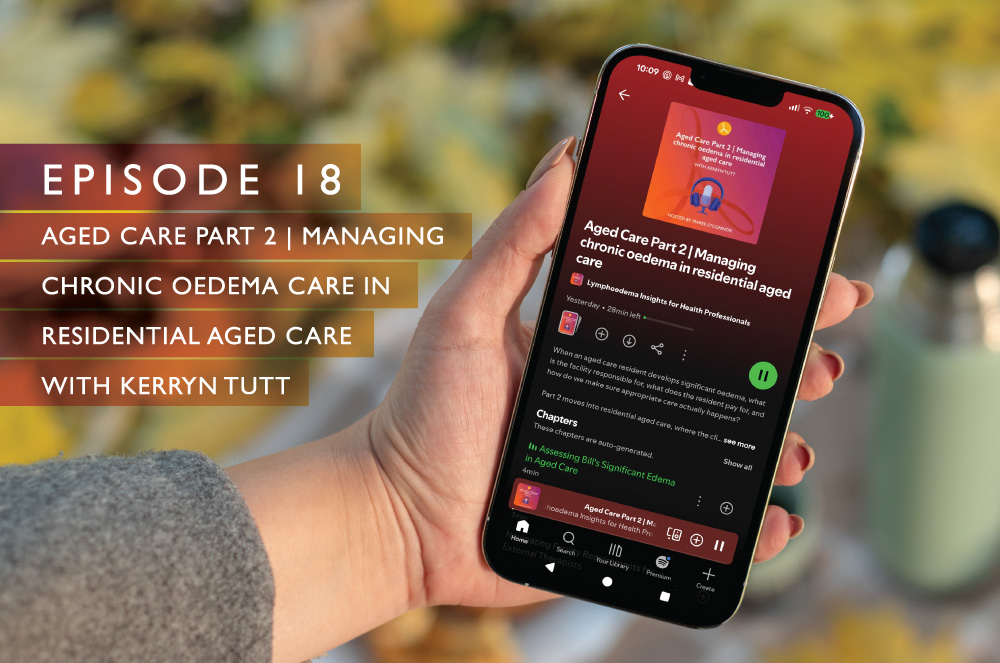
When an aged care resident develops significant oedema, what is the facility responsible for, what does the resident pay for, and how do we make sure appropriate care actually happens?
Part 2 moves into residential aged care, where the clinical and funding picture is quite different.
Using “Bill”, a resident with significant lower limb oedema and lymphorrhoea, Maree and Kerryn Tutt explore what should happen when oedema is identified, when specialist lymphoedema expertise may be needed, and the responsibilities of the facility, clinician, resident and family. They unpack who pays for specialist assessment, bandaging, dressings, compression garments and other equipment, as well as how clinicians can make sure their recommendations translate into day-to-day care.
The episode also highlights a broader opportunity for aged care: earlier recognition and intervention, building oedema management into routine care, and improving staff knowledge before oedema progresses to more complex problems.
About our guest speaker Kerryn Tutt:
Kerryn is an executive leader and physiotherapist with over 25 years experience in aged care, disability and allied health. She has led multidisciplinary teams and major service transitions across multiple organisations. Kerryn brings both clinical and executive insight, helping practitioners deliver high quality person centre care under the new changes .
Sponsor
This episode of Lymphoedema Insights is proudly supported by Essity.
Essity Health & Medical supports the management of chronic oedema in older people with a range of compression and skin care solutions, including JOBST Elvarex Soft, JOBST Activa soSoft, JOBST FarrowWrap and Leukoplast Skin Sensitive products.
Together with education and practical clinical support, these options can help clinicians provide individualised oedema management and skin care for older people.
To learn more, visit medical.essity.com.au.
🎧 Listen to Episode 18
Key Takeaway Messages
Significant oedema in residential aged care needs proper clinical assessment, beginning with consideration of underlying causes and red flags such as cellulitis, DVT, heart failure, wounds and vascular issues.
Positioning, mobility, wound care and skin management are part of oedema management. It is not simply a matter of applying compression.
Where the facility does not have appropriate internal expertise, referral to a specialist lymphoedema clinician may be required.
External specialist services may be treated differently from routine facility-provided allied health, and the resident or family may be expected to meet the cost.
External clinicians still need to meet facility requirements for credentials, screening, insurance, induction and safe practice.
Recommendations need to reach the resident’s care plan. If they sit only in an attached report, they may not influence day-to-day care.
Staff may need practical training in donning and doffing compression correctly. Clear instructions, videos or bedside guidance may help ensure consistency across multiple care workers.
Facilities generally cover consumable nursing supplies such as bandaging, padding, wound dressings and basic skin care products, while individual-use items such as garments, wraps and pumps may need to be funded by the resident.
Early intervention is a major opportunity. Routine recognition of swelling, skin changes and functional decline may help avoid more complex oedema, wounds and lymphorrhoea later.
What can you do now
- Assess for red flags and underlying causes before progressing to compression.
- Review vascular status, skin integrity, wounds, mobility and positioning as part of the assessment.
- Establish who is responsible for funding specialist assessment and ongoing review before commencing care.
- Ask how your notes and recommendations will be incorporated into the facility’s care plan.
- Give staff very clear instructions for compression application, removal, skin care and escalation.
- Consider practical education tools such as written instructions, bedside guides or short videos where appropriate.
- Encourage facilities to build basic oedema recognition into routine clinical care and staff education.
- Promote early referral before oedema progresses to lymphorrhoea, wounds or more complex management needs.
Catch up
🎧 Listen to all episodes of Lymphoedema Insights for Health Professionals available on Spotify and Apple Podcasts


