October 2026 LES Actions for Engagement
Survivorship Support: Long-term wellbeing and breast cancer-related lymphoedema
Breast cancer survivorship extends well beyond the completion of treatment. For some people, lymphoedema, changes in shoulder movement, discomfort, altered body confidence, fatigue and uncertainty about future symptoms can continue to affect daily life months or years later.
Long-term care therefore involves more than monitoring swelling. It includes recognising changing priorities, supporting function and confidence, maintaining appropriate surveillance and helping people understand when and how to seek further support.
This month’s Actions for Engagement focuses on practical ways clinicians can strengthen long-term support for people living with, or at risk of, breast cancer-related lymphoedema. The five actions encourage reflection, collaboration, evidence-informed practice, professional growth and clinical review, with a particular focus on what happens beyond the immediate treatment period.
Each action is designed to encourage a small but meaningful consideration that may strengthen continuity of care, patient confidence and longer-term wellbeing.
Five Ideas. Practical Prompts. Use What Fits.
This month, we invite you to consider five practical actions that support thoughtful, responsive survivorship care.
Reflection
Ask yourself what matters most to one patient now that they are further along in their recovery.
For example, a patient who initially focused on controlling swelling may now be more concerned about returning to exercise, clothing choices, work, travel or feeling confident using their arm.
Collaboration
Review how one patient moves between lymphoedema care and their broader survivorship team.
For example, consider whether communication between the lymphoedema therapist, physiotherapist, breast care nurse, GP or oncology team makes it clear who is monitoring ongoing symptoms and when re-referral may be needed.
Evidence
Review one guideline or current resource on long-term surveillance after breast cancer treatment.
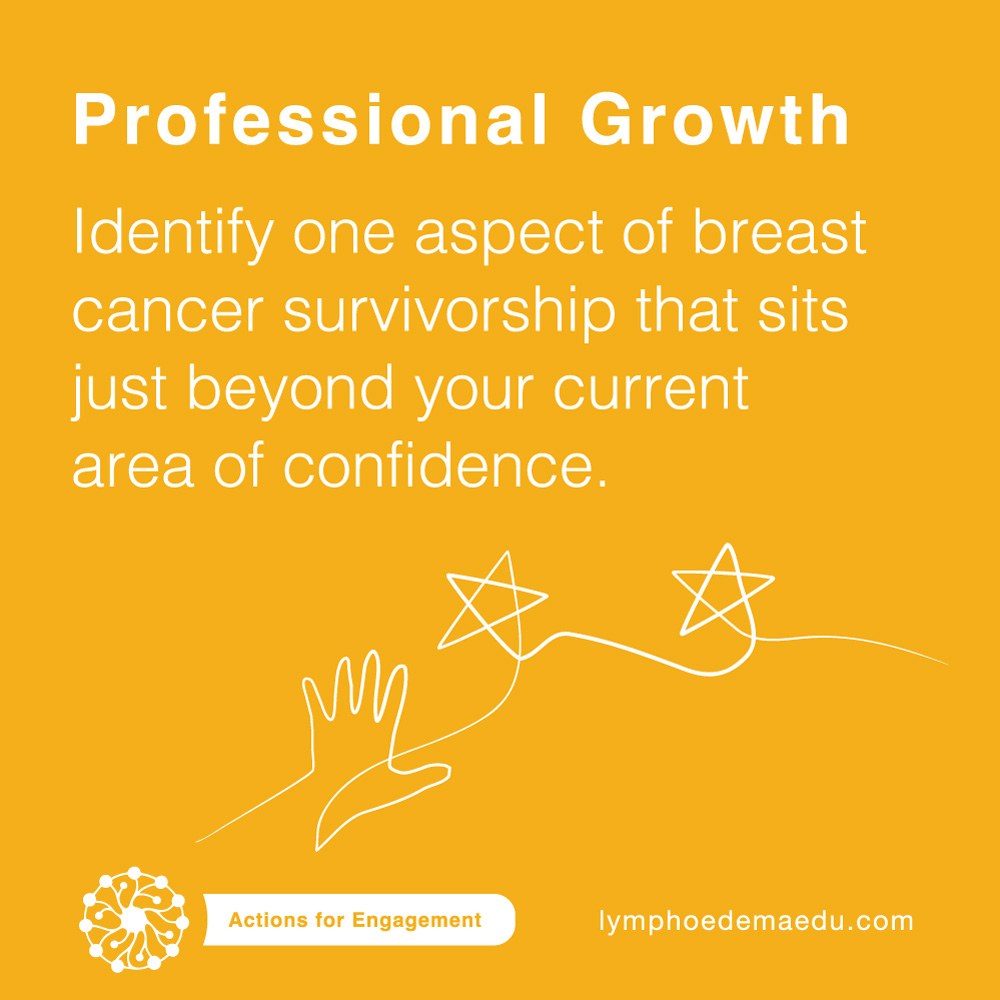
For example, Identify one aspect of breast cancer survivorship that sits just beyond your current area of confidence.
Professional Growth
Strengthen one skill that helps you recognise deterioration or complications earlier.
For example, you may want to understand more about axillary web syndrome, persistent pain, exercise progression, breast or chest wall oedema, body image, or supporting a return to usual activities.
Clinical Practice
Include one longer-term outcome in your review of a patient living with breast cancer-related lymphoedema.
For example, alongside oedema measures, ask about shoulder movement, comfort, activity, confidence with self-management or participation in activities that matter to the patient.
These actions are not intended as a checklist. Select the prompt that is most relevant to your current practice, discuss it with colleagues, or use it as a starting point for reflection within your team.
Explore further by connecting these prompts with current evidence, patient feedback, clinical discussions and learning opportunities related to breast cancer survivorship and lymphoedema care.
Check back monthly as new Actions for Engagement resources and practical prompts are added to support clinical practice.
Long-term survivorship care can change as people’s lives, priorities and symptoms change. A question asked, outcome reviewed or connection strengthened can help ensure lymphoedema care continues to support what matters to the person.
See it. Share it. Start a conversation.
Each image below highlights one of the October Actions for Engagement prompts. We invite you to share them with colleagues, display them within your workplace, use them as discussion starters during team meetings, or revisit them throughout the month as reminders that survivorship care continues well beyond the completion of cancer treatment.