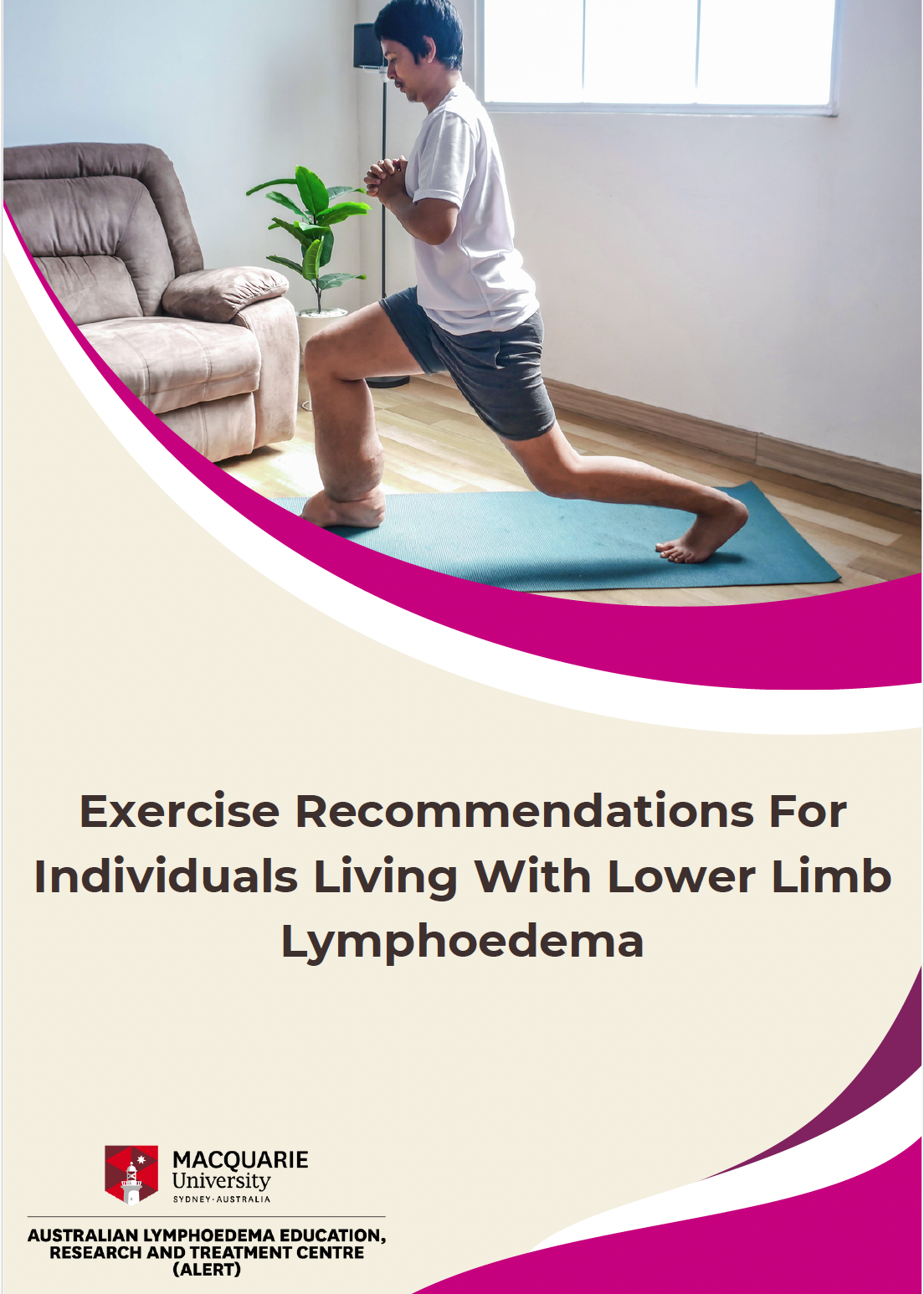
Exercise Recommendations for Lower Limb Lymphoedema
Insights from an International Delphi Study

Exercise is increasingly recognised as an important part of managing lower limb lymphoedema.
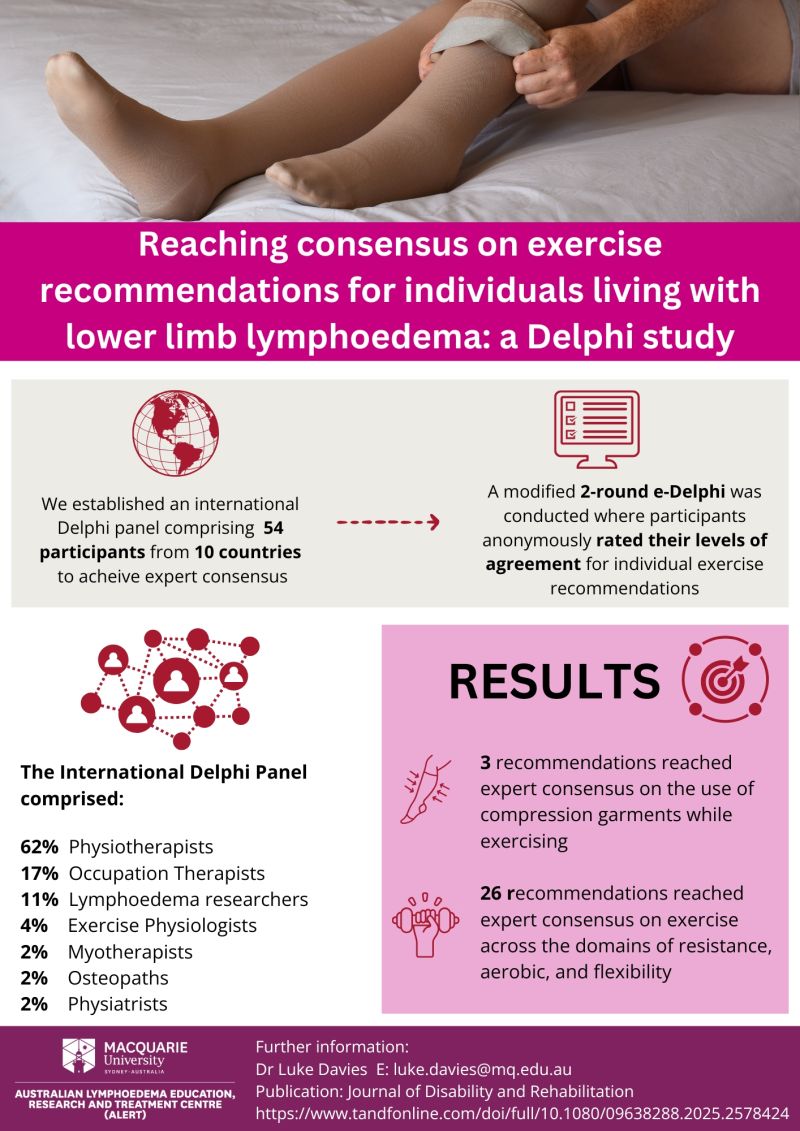
A recent Delphi study conducted by the Australian Lymphoedema Education, Research and Treatment Centre (ALERT) aimed to establish international consensus on exercise recommendations for this population. The study synthesised expert opinion from 54 clinicians and researchers across 10 countries.
The study provides evidence-based guidance for clinicians regarding exercise types, frequency, and the use of compression garments.
- Consensus was reached on 26 exercise recommendations and 3 recommendations on compression garment use.
- Emphasis was placed on a multimodal approach, combining resistance, aerobic, and flexibility exercises.
- The recommendations were developed to support both symptom management and overall health outcomes.
Reaching consensus on exercise recommendations for individuals living with lower limb lymphoedema: a Delphi study.
Davies, L. M., Koelmeyer, L., Gaitatzis, K., Paramanandam, V. S., & Thompson, B. (2025). Disability and Rehabilitation, 1–9. https://doi.org/10.1080/09638288.2025.2578424
1. Multimodal Exercise Recommendations
The Delphi panel recommended combining resistance, aerobic, and flexibility exercises.
- Resistance: 2–4 sessions per week, moderate intensity (2 sets of 8–15 reps at ~60% of 1RM), 20–30 minutes per session. Examples include free weights, resistance bands, or bodyweight exercises.
- Aerobic: 3–7 sessions per week, moderate intensity (Borg 11–14), 5–40 minutes per session, targeting 150 minutes per week. Activities included walking, swimming, cycling, or water-based exercises.
- Flexibility: At least 2 sessions per week, stretching to mild discomfort. Included static or dynamic stretches and mobility exercises.
Key point: The panel highlighted tailoring programs to individual patient needs, progressing gradually, and considering co-morbidities.
2. Recommendations on Compression Garments
The panel provided nuanced guidance on compression use during exercise.
- Wearing traditional compression garments during exercise was recommended to support fluid management and symptom control.
- Alternatives, such as sports compression garments or exercising without compression under supervision, were suggested for individuals who find standard garments uncomfortable.
Key point: Flexibility in garment choice was emphasised to facilitate adherence while monitoring response.
3. Supporting Long-Term Exercise Engagement
The Delphi study highlighted the importance of gradual progression and behavioural support.
- Patients may initially struggle to meet the recommended activity thresholds.
- Emphasis was placed on the potential long-term health benefits of regular exercise, including improved quality of life and reduced co-morbidity risk.
- Monitoring progress and adjusting programs were recommended as part of ongoing management.
4. Addressing Barriers
The panel acknowledged that barriers such as discomfort, motivation, or access can impact adherence.
- Suggested strategies included identifying patient-specific challenges and providing alternative or modified exercises, such as water-based activities.
- Participation in group programs or support networks was noted as a potential facilitator of adherence.
5. Evidence-Based Practice
The recommendations are grounded in international expert consensus.
- They reflect the opinions of a multidisciplinary panel of clinicians and researchers.
- The framework provides a reference for clinicians seeking evidence-informed guidance on exercise in lower limb lymphoedema.
Emerging Considerations
The Delphi study also identified areas for future research.
- Further investigation of the effectiveness of compression garments during exercise.
- Exploration of the optimal balance of resistance, aerobic, and flexibility exercises.
- Potential use of wearable technology to monitor patient progress and adherence.
Conclusion
The study provides a structured, evidence-informed framework of exercise recommendations for individuals with lower limb lymphoedema.
These recommendations reflect international expert consensus and highlight a multimodal, flexible approach to exercise, acknowledging patient variability and potential barriers. Clinicians can use this framework as a reference to inform practice while considering individual patient circumstances.
Additional resources