
Managing Challenging Lymphoedema
Practical Strategies Across the Care Continuum
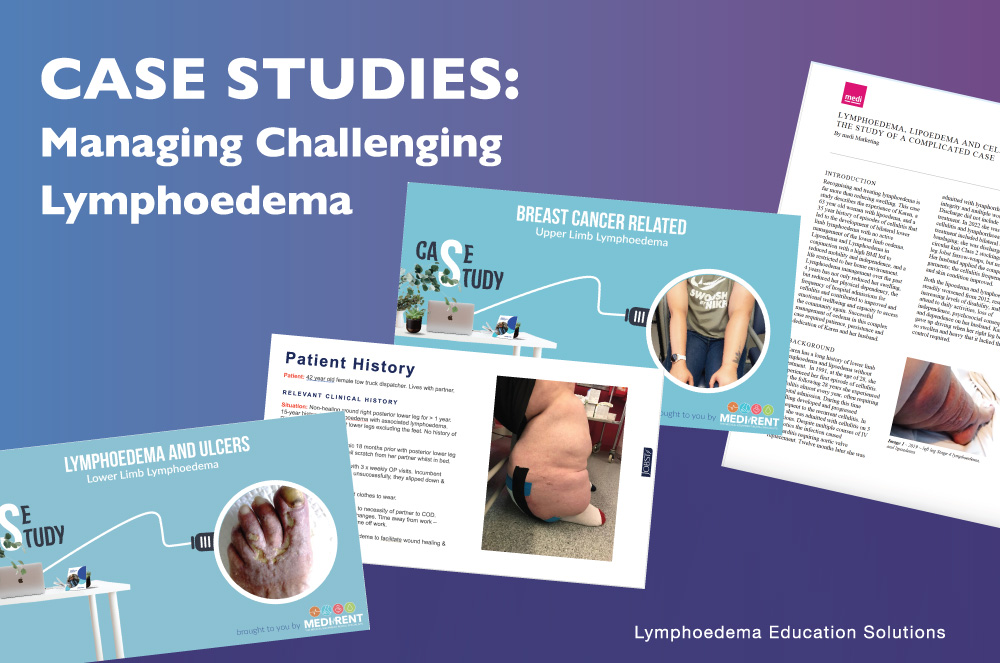
Lymphoedema management rarely follows a straightforward pathway. While compression remains a cornerstone of care, clinicians frequently need to adapt treatment strategies as disease severity, patient tolerance, and clinical goals evolve.
Patients may present with early swelling during cancer treatment, long-standing lymphoedema complicated by wounds, or advanced disease associated with reduced mobility and recurrent infections. In each scenario, clinicians must balance effective oedema management with the realities of daily life, comorbidities, and long-term sustainability.
The following real-world cases highlight practical approaches used across different stages of lymphoedema management, illustrating how clinicians adapt strategies to support both clinical outcomes and quality of life.
Early Intervention and Responsive Treatment
Early identification and treatment of lymphoedema can significantly influence long-term outcomes. Prompt intervention helps limit progression, reduce tissue changes, and support patients in establishing sustainable self-management routines.
One case involved a 31-year-old woman who developed significant upper limb lymphoedema during treatment for inflammatory breast cancer. Intensive compression bandaging initially resulted in a substantial reduction in limb volume. However, during the maintenance phase, progress began to plateau.
Introducing intermittent pneumatic compression alongside her existing compression regimen provided further reductions in oedema and improvements in tissue texture, demonstrating how adjunctive therapies can support continued progress when standard approaches reach their limits.
“We achieved strong early reductions with intensive bandaging, but additional strategies were needed to maintain progress as treatment continued.”
Case Study 1 – Early Intervention During Cancer Treatment
A 31-year-old woman developed significant upper limb lymphoedema during treatment for inflammatory breast cancer. Intensive compression therapy achieved early volume reduction, while the addition of intermittent pneumatic compression helped support continued improvement when progress plateaued.
▶ Watch the full case study below
Integrated Management for Complex Lower Limb Disease
For many patients, lymphoedema is accompanied by additional complications such as wounds, fibrosis, or reduced mobility. In these cases, management strategies often need to address multiple clinical priorities simultaneously.
A 50-year-old man with an 18-year history of bilateral lower limb lymphoedema presented with chronic foot ulcers, recurrent cellulitis, and significant mobility limitations. His condition had forced him to give up his glass-blowing career and reduced his participation in creative activities.
A comprehensive management approach combining intermittent pneumatic compression, compression garments, exercise, and wound care helped reduce limb volume and support wound healing. As his condition improved, he was able to resume gardening and spend more time creating artwork again.
“The fluid in my legs felt like bricks. As the swelling improved, it became easier to move and return to the activities I enjoy.”
Case Study 2 – Managing Chronic Lymphoedema with Wounds
A patient with an 18-year history of bilateral lower limb lymphoedema presented with chronic ulcers, fibrosis, and recurrent cellulitis. A comprehensive management plan combining compression, pneumatic compression, exercise, and wound care helped reduce limb volume and improve healing.
▶ Watch the full case study below
Compression Strategies to Support Decongestion and Maintenance
In patients with long-standing oedema, a staged approach to compression may be required to achieve both decongestion and sustainable long-term management.
One patient with bilateral lipoedema and lymphoedema presented with a chronic lower-leg wound that had failed to heal for more than a year. Initial bandaging successfully reduced oedema and supported wound healing.
Following this decongestion phase, custom compression garments were introduced for maintenance, while adjustable compression wraps provided additional support during periods of increased swelling or activity. Over time, the patient reported significant improvements in mobility and comfort, as well as greater confidence in managing her condition independently.
“The support from the wraps made a huge difference — they became my ‘new best friends’ for keeping my legs at their best.”
Case Study 3 – Compression for Decongestion and Long-Term Maintenance
A woman with long-standing lipoedema and lymphoedema presented with a chronic lower-leg wound that had failed to heal for over a year. A staged approach using bandaging followed by custom compression garments and adjustable wraps supported oedema reduction and sustained wound healing.
▶ Read the full case study
Long-Term Management of Advanced Lymphoedema
For some patients, lymphoedema develops gradually over decades, often complicated by recurrent infections and progressive loss of independence.
Karen, a 63-year-old woman with lipoedema and bilateral lower limb lymphoedema, experienced recurrent cellulitis for more than 30 years. The swelling eventually became so severe that she was unable to drive or move around independently.
When she finally commenced lymphoedema treatment, management required careful consideration of her comorbidities, limb shape distortion, fragile skin, and the practical challenges of applying compression at home. A staged approach using adjustable compression wraps followed by custom flat-knit garments gradually reduced oedema and improved limb shape.
With consistent treatment and strong support from her husband and clinician, Karen was able to regain mobility and begin re-engaging with activities outside the home.
As her swelling improved, Karen was able to get in and out of bed more easily, use mobility aids independently, and reconnect with her community.
“The patience and persistence of Karen and her husband were essential in achieving these outcomes.”
Case Study 4 – Long-Term Management of Advanced Lymphoedema
After more than three decades of recurrent cellulitis and progressive lower limb swelling, a patient began comprehensive lymphoedema management. A carefully staged compression approach helped reduce oedema, improve mobility, and restore independence in daily activities.
▶ Read the full case study below
Across these cases, one message is clear: successful lymphoedema management is not defined by a single treatment, but by the careful integration of strategies tailored to each patient’s circumstances.
Key Clinical Insights
Across these cases, several important themes emerge.
- Early intervention can significantly influence long-term outcomes
- Compression strategies often need to evolve as patient needs change
- Adjunctive therapies can support treatment when progress plateaus
- Complex presentations frequently require integrated management approaches
- Patient support systems and lifestyle factors play a crucial role in long-term success
Ultimately, successful lymphoedema management is rarely about a single intervention. It requires thoughtful clinical decision-making, adaptable treatment strategies, and ongoing collaboration between clinicians, patients, and their support networks.
Thank you
Thank you to our industry partners for supporting this article

Website: www.essity.com
Email: Customerservice.AU@essity.com
ANZ JOBST Clinical Team contact details: https://linkly.link/2Zbup

Website: www.mediaustralia.com.au
Sales & Orders: sales@medi.au
Customer Services – (02) 9890 8696 or 1300 04 MEDI (6334)
Catalina Escobar Llanos – 0477 447 751 (NSW & ACT) catalina@medi.au
Jennifer (Jenny) Gilbert – 0477 034 655 (QLD,Vic,Tas,NT,SA,WA) jennifer@medi.au

Website: medirent.com.au
Orders: info@medirent.com.au
Clinical & Sales Support: https://linkly.link/2Zbsv


