
Bridging Two Worlds: Insights on Engagement from a Health Professional Living with Lymphoedema
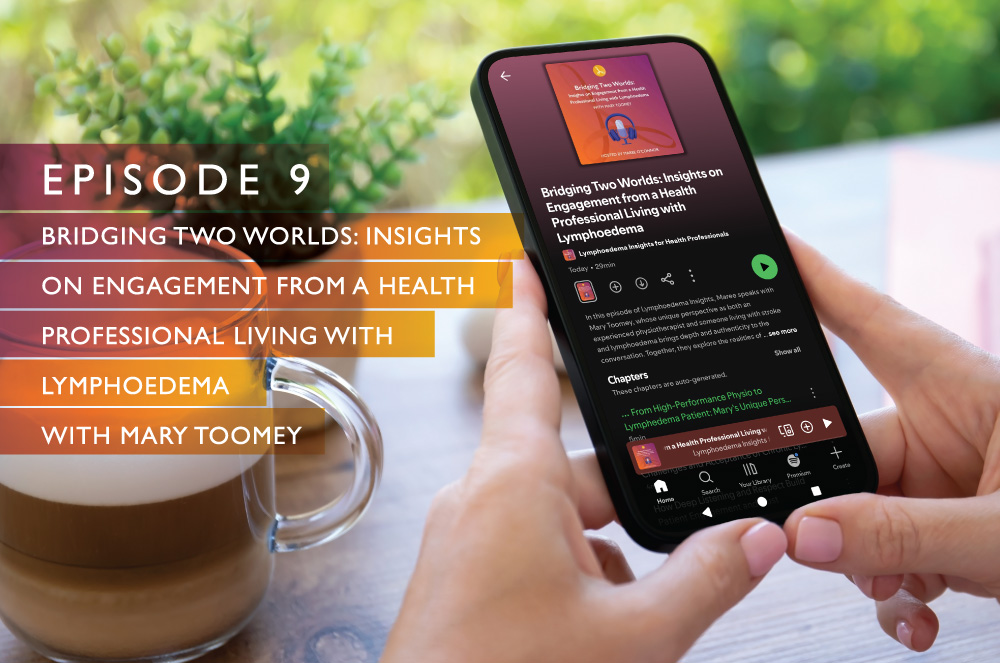
In this episode of Lymphoedema Insights, Maree speaks with Mary Toomey, whose unique perspective as both an experienced physiotherapist and someone living with stroke and lymphoedema brings depth and authenticity to the conversation. Together, they explore the realities of long-term management, the intersection of neurological change and lymphoedema, and the practical and relational factors that influence engagement over time. Whether you are early in your career or have decades of experience, this episode offers thoughtful reflections on listening, shared decision-making, and the subtle elements of care that shape outcomes in chronic oedema management.
About our guest speaker: Mary Toomey
Mary Toomey is a former physiotherapist and high-performance health leader with more than three decades’ experience across hospital care, private practice, and elite sport. After graduating in 1979, she worked extensively in high-performance environments, holding senior roles with organisations including the Melbourne Storm, Netball Australia, and the Queensland Academy of Sport, where she led multidisciplinary health and wellbeing teams supporting elite athletes.
Following a major stroke in 2016, Mary transitioned academically into sociology and is currently undertaking a PhD exploring racism as a social determinant of health for First Nations athletes. Drawing on her clinical, managerial, and lived experience perspectives, her work focuses on the structural and social drivers of health, wellbeing, and equity, with a particular interest in how systems shape outcomes across sport and health settings.
🎧 Listen to Episode 9
Key Practice Reflections from This Episode
- Listen beyond the clinical presentation
Create deliberate space for patients to describe what daily life is actually like. Ask, “What does this mean for you day to day?” before moving into problem-solving.
- Check assumptions — especially with experience
Past clinical patterns are helpful, but they can also narrow thinking. Approach each person as a new presentation, not a category.
- Be mindful of tone and language
Small phrases matter. Avoid paternalistic language (e.g., “What are we going to do today?”). Instead, clearly outline options and invite the patient’s perspective.
- Offer options, not directives
Present strategies as possibilities: “Here are a few approaches we could consider — what feels realistic for you?” Agency drives engagement.
- Validate lived expertise
People living with chronic conditions are experts in their own bodies. Acknowledge that explicitly.
- Consider practical barriers to adherence
Before labelling someone “non-compliant,” explore logistics: physical limitations, cost, time, funding structures, access to services.
- Recognise the neurological–lymphatic interface
When working with post-stroke or neurological presentations, consider how spasticity, mobility limitations, and fatigue may influence oedema management.
- Sit with complexity
Not everything is recipe-driven. Some of the most therapeutic moments come from presence, silence, and collaborative problem-solving rather than immediate solutions.
- Respect identity and intellectual capacity
Disability does not diminish insight, ambition, or professional identity. Avoid unconscious assumptions.
- Reflect on your consultation habits
After your next appointment, ask yourself: Did I truly listen? Where did I interrupt? Did I assume?
Catch up
🎧 Listen to all episodes of Lymphoedema Insights for Health Professionals available on Spotify and Apple Podcasts


