
Preventing Recurrent Cellulitis
What New Compression Evidence Means for Practice
Cellulitis is common, and recurrence contributes significantly to its burden. An estimated 43 million cases occurred globally in 2019, and around 26–47% of people experience another episode within a few years. Recurrent episodes contribute to repeated antibiotic exposure, hospitalisation and increasing healthcare use.
Chronic oedema is an important part of this picture. It is present in an estimated 45–70% of people with cellulitis and is one of the strongest risk factors for both first and recurrent episodes. Infection can also cause or worsen oedema, creating a cycle that increases susceptibility to further cellulitis.
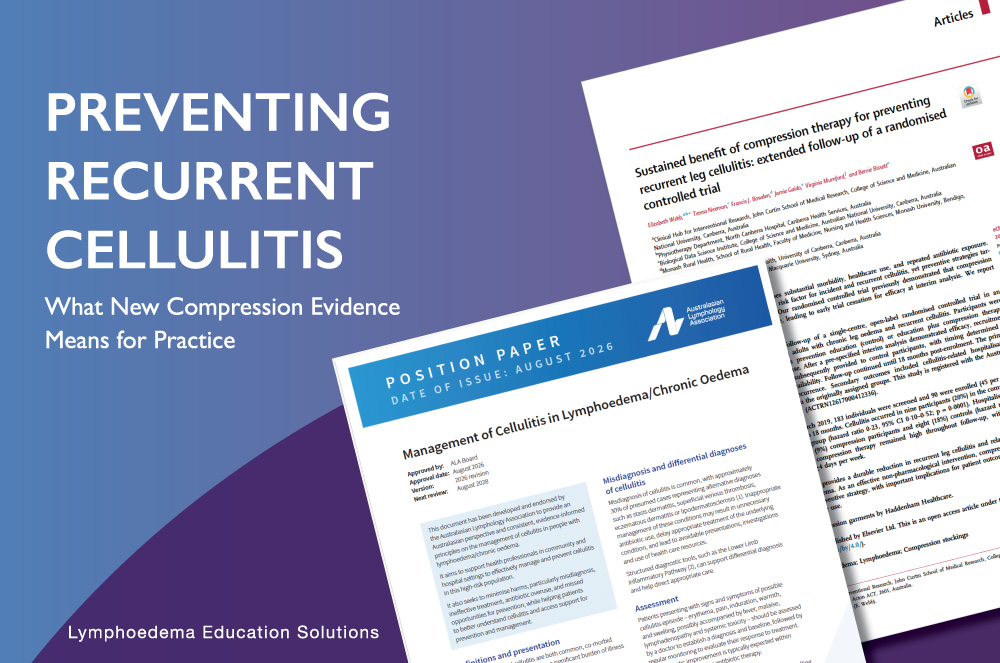
New Australian research from Elizabeth Webb and colleagues provides important evidence about how this cycle may be interrupted. Their newly published extended follow-up of a randomised controlled trial shows that compression therapy provides sustained protection against recurrent leg cellulitis and related hospitalisation in adults with chronic oedema.
The findings coincide with the Australasian Lymphology Association’s updated position paper, Management of Cellulitis in Lymphoedema/Chronic Oedema, which incorporates chronic oedema management and compression into its recommendations for cellulitis prevention.
Does the benefit of compression last?
Webb and colleagues originally investigated whether compression therapy could reduce recurrent cellulitis in adults with chronic leg oedema and a history of recurrent infection.
Ninety participants were randomised to receive either cellulitis prevention education alone or the same education plus compression therapy. Education in both groups addressed skin care, weight management, prevention of interdigital fungal infection and regular exercise. Compression was individually prescribed and fitted by accredited lymphoedema therapists.
The original trial was stopped early after an interim analysis demonstrated a substantial reduction in recurrence. The newly published study extends median follow-up from approximately six months to 18 months, allowing researchers to determine whether this protective effect was sustained over time.
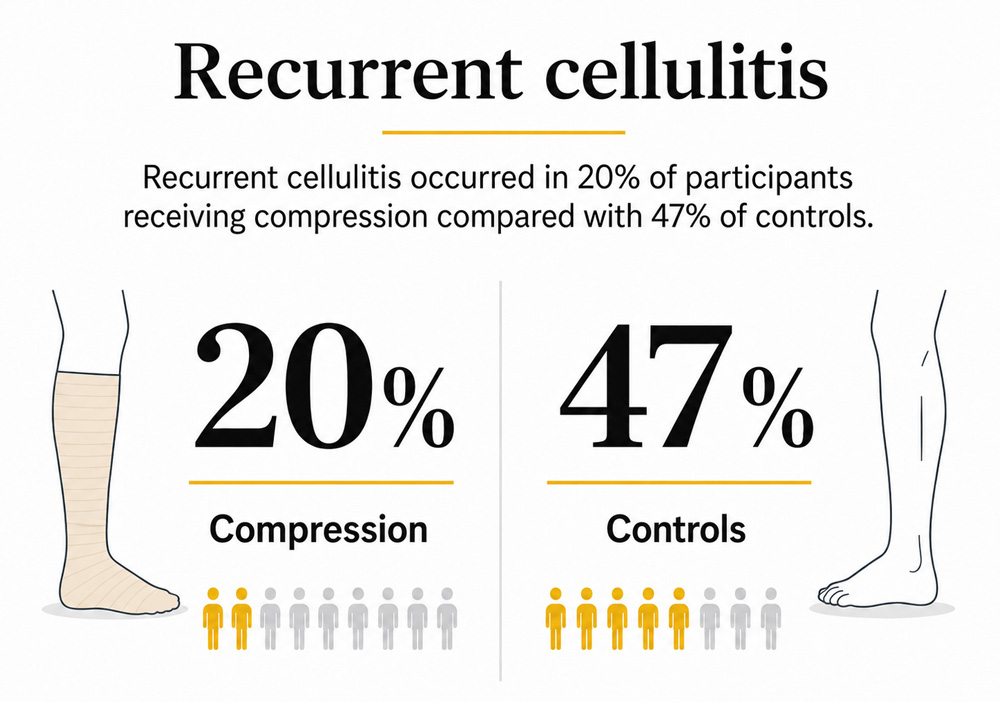
The extended follow-up confirmed that the benefit was maintained. Compression therapy was associated with a 77% reduction in the hazard of recurrent cellulitis, with an absolute difference in event rates of 27 percentage points. The reported number needed to treat was four.
“Compression therapy provides a durable reduction in recurrent leg cellulitis and related hospitalisation in patients with chronic oedema.”
— Webb et al., 2026
Fewer hospitalisations
The extended follow-up also demonstrated an important effect on hospitalisation.
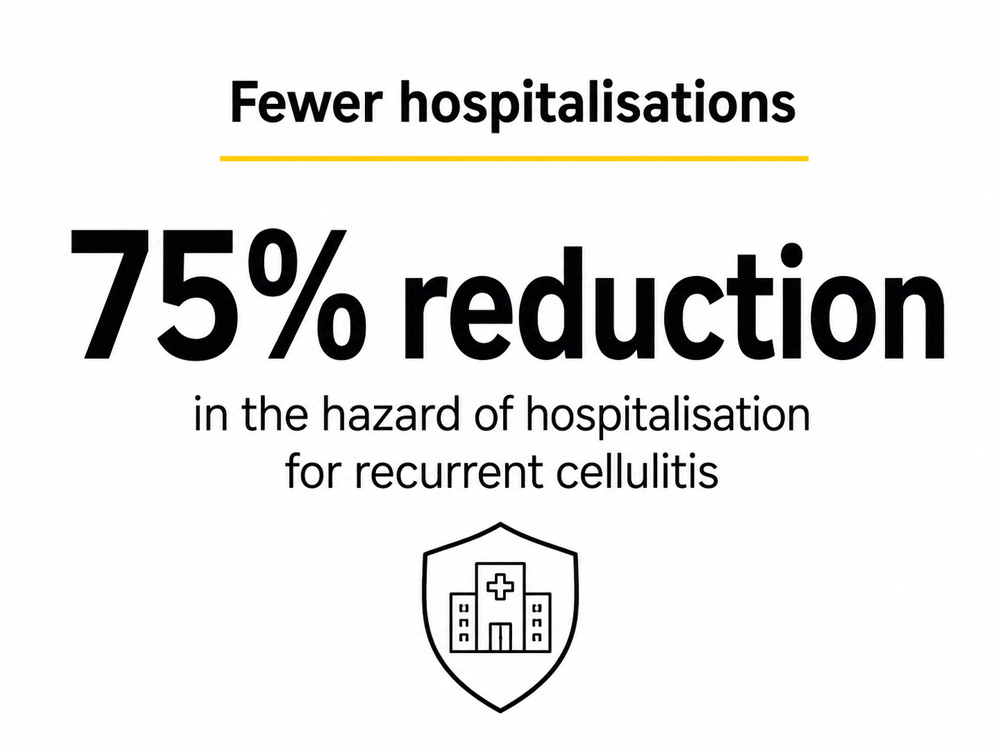
Hospitalisation for recurrent cellulitis occurred in 9% of participants receiving compression compared with 18% of controls. Compression therapy was associated with a 75% reduction in the hazard of hospitalisation for recurrent cellulitis.
Adherence was sustained too, with 85% of participants reporting compression garment use on at least four days per week during follow-up.
Together, these findings strengthen the case for compression as more than a treatment for swelling. Webb and colleagues conclude that compression should be considered a first-line preventive strategy, with potential benefits for patient outcomes, antibiotic stewardship and healthcare use.
“Compression therapy should be considered a first-line preventive strategy.”
— Webb et al., 2026
What does this mean for clinical practice?
For clinicians working with lymphoedema and chronic oedema, the emerging message is clear.
- Check the diagnosis. Redness, swelling and inflammation do not automatically indicate cellulitis. Alternative causes of lower-limb inflammation should be considered.
- Look for chronic oedema. A history of cellulitis should prompt assessment for persistent swelling and other modifiable risk factors.
- Address the broader risk profile. Skin integrity, fungal infection, wounds, obesity and oedema all deserve attention as part of recurrence prevention.
- Don’t automatically abandon compression during an acute episode. Where appropriate, tolerated and safely applied, compression may continue or be reintroduced promptly if it has been temporarily removed.
- Make oedema management central to prevention. The extended Webb RCT provides strong evidence that compression can substantially reduce recurrent cellulitis and related hospitalisation in people with chronic leg oedema.
- Think beyond antibiotics. Antibiotics remain essential for treating cellulitis and have a role in prophylaxis for selected patients, but addressing modifiable risk factors is also fundamental to preventing recurrence.
What does the updated ALA guidance add?
The updated ALA position paper reinforces the clinical implications of the Webb research and adds practical guidance around diagnosis, acute management and prevention.
This is also reflected in the updated ALA position paper, which recommends that all patients with a history of cellulitis be assessed for chronic oedema. Where chronic oedema is identified, referral to a lymphoedema practitioner for assessment and management, including compression therapy, is recommended.
“All patients with a history of cellulitis should be assessed for chronic oedema.”
— ALA, Management of Cellulitis in Lymphoedema/Chronic Oedema
The updated guidance also highlights several important points for clinical practice.
Accurate diagnosis matters. Around 30% of presumed cellulitis cases may represent another condition, including stasis dermatitis, superficial venous thrombosis, eczematous dermatitis or lipodermatosclerosis. Bilateral cellulitis is rare and should prompt consideration of alternative causes of lower-limb inflammation. The ALA points clinicians to the British Lymphology Society’s Lower Limb Inflammatory Pathway to support differential diagnosis.
Acute treatment has been updated. The position paper provides antibiotic treatment pathways adapted from the March 2025 Therapeutic Guidelines recommendations for cellulitis and erysipelas. It also notes that persistent skin discolouration or mild local inflammation can continue after treatment and does not necessarily indicate ongoing infection or a need for further antibiotics.
Compression does not automatically need to stop during cellulitis. Where compression is tolerated and can be safely applied, it may continue during an acute episode. If it is temporarily removed because of pain, increased swelling or skin breakdown, it should be reintroduced as soon as appropriate.
The ALA also recommends addressing skin integrity, fungal infection, wounds, obesity and chronic oedema as part of recurrence prevention. Antibiotic prophylaxis may be considered for selected patients experiencing at least two episodes per year, after other prevention strategies have been implemented.
Read the full resources
The extended findings from Webb and colleagues strengthen the evidence for chronic oedema management as a key part of cellulitis prevention. The updated ALA position paper provides a practical framework for applying that evidence in clinical care.
Effective cellulitis management does not end when the infection resolves. Managing chronic oedema may be one of the most important opportunities to help prevent the next episode.
Thank you
LES acknowledges and thanks Essity, Hartmann and OPC Health for sponsoring this article. The article was independently researched, developed, and written by LES.