
Therapist Strategies for Maintaining Patient Engagement
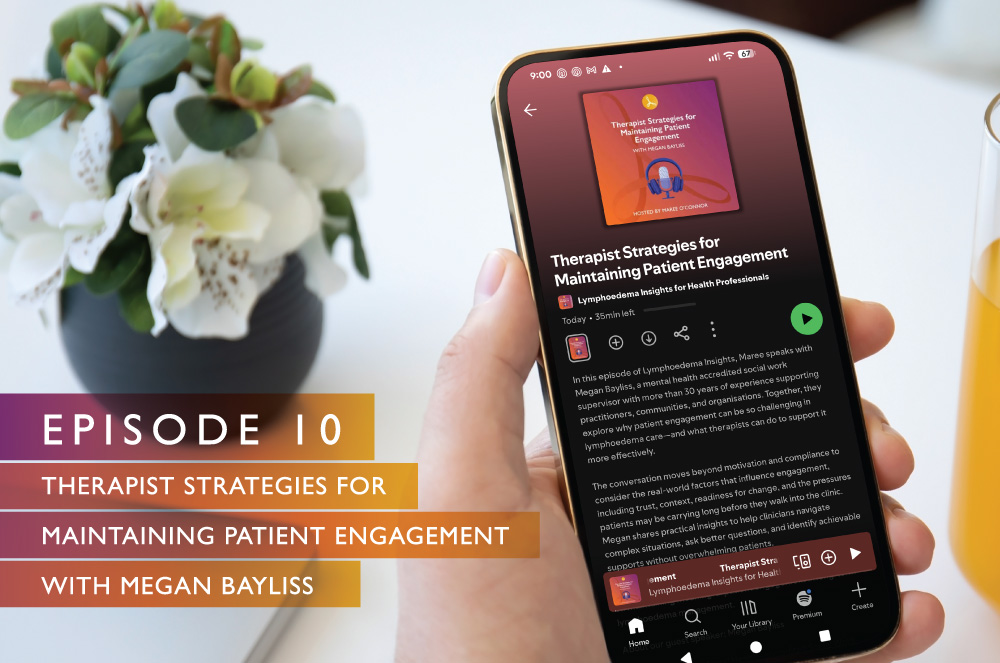
In this episode of Lymphoedema Insights, Maree speaks with Megan Bayliss, a mental health accredited social work supervisor with more than 30 years of experience supporting practitioners, communities, and organisations. Together, they explore why patient engagement can be so challenging in lymphoedema care—and what therapists can do to support it more effectively.
The conversation moves beyond motivation and compliance to consider the real-world factors that influence engagement, including trust, context, readiness for change, and the pressures patients may be carrying long before they walk into the clinic. Megan shares practical insights to help clinicians navigate complex situations, ask better questions, and identify achievable supports without overwhelming patients.
This episode offers thoughtful strategies and fresh perspectives on maintaining meaningful patient engagement in long-term lymphoedema management.
About our guest speaker: Megan Balyliss
Megan Bayliss is a Mental Health–accredited Social Work supervisor, researcher, and PhD candidate specialising in psychoeducation, bibliotherapy, and lived experience scholarship. She brings over 30 years’ experience as a clinical therapist, working across sexual assault services, relational practice, workforce supervision, and community-based social services in rural, remote, and international settings.
A recipient of the prestigious CDUDES scholarship, Megan’s doctoral research explores how readers use popular psychology literature to navigate life-changing experiences, drawing on digital methodologies including online book clubs. She has held senior practice, leadership, and program development roles across health, community, and First Nations contexts, and is committed to knowledge translation that supports wellbeing, reflective practice, and community resilience.
Sponsor
This episode of Lymphoedema Insights is proudly supported by OPC Health, a trusted distributor of compression and consumable products for more than 40 years. OPC Health offers a comprehensive range including Juzo, Mobiderm, Jobst, LymphaTouch, and leading bandaging, scar management and wound care products. With a global supplier network, they deliver innovative, evidence-based solutions to support clinicians and improve patient outcomes Australia wide. Their strong commitment to education ensures healthcare professionals have the knowledge and resources needed to provide high quality care.
Learn more at https://fdl8.short.gy/OPCHealthCompression
🎧 Listen to Episode 10
Therapist Strategies for Maintaining Patient Engagement
Below are strategies discussed in the podcast, along with ideas for gently integrating them into clinical practice:
1. Active Listening
Approach: Focus on truly understanding patients’ needs, emotions, and priorities.
Ways to Encourage This:
- Consider the SOLER framework to guide your posture and presence:
- S: Sit squarely to face the patient.
- O: Maintain open body language.
- L: Lean slightly forward to show engagement.
- E: Make purposeful eye contact.
- R: Relax and focus on the patient’s words.
- Try to stay fully present rather than planning your response while the patient speaks.
2. Effective Attending
Approach: Be mindful of how your presence, attention, and awareness influence interactions.
Ways to Encourage This:
- Reflect on your own geo-sociopolitical standpoint and how it may shape perceptions.
- Consider the patient’s background—cultural, social, and political—to understand their perspective.
- Notice your emotional state and explore ways to remain present and attentive during consultations.
3. Co-Creating Goals
Approach: Explore ways to collaborate with patients on goals that feel meaningful to them.
Ways to Encourage This:
- Ask open-ended questions about what matters most to the patient.
- Try imaginative prompts, like the “magic wand” question: “If you had a magic wand, what would you do with your healthcare?”
- Consider visual tools, such as a staircase illustration, to break down goals into manageable steps.
4. Motivational Interviewing
Approach: Use curiosity-driven questions to help patients reflect on and take ownership of their care.
Ways to Encourage This:
- Ask about small, achievable actions: “What’s one small step you could take today toward your goal?”
- Explore scaling questions, e.g., “On a scale of 1–10, how important is this goal to you?”
- Introduce gamified or interactive elements to make the process more engaging.
5. Psychoeducation
Approach: Support patients and families with clear, compassionate information about conditions and treatment options.
Ways to Encourage This:
- Offer resources—written, audio, or visual—that patients can access at their own pace.
- Strive for honesty while maintaining empathy when discussing prognosis or limitations.
- Emphasize shared decision-making, using phrases such as “Nothing about me without me.”
6. Room Setup
Approach: Consider how the physical environment can influence comfort, communication, and respect.
Ways to Encourage This:
- Reduce barriers between you and the patient, such as desks or screens.
- Position yourself nearby to foster connection.
- Think about safety and comfort for both patient and practitioner.
7. Long-Term Engagement
Approach: Explore factors that influence sustained motivation and consistency.
Ways to Encourage This:
- Reflect on potential barriers, such as discomfort or home dynamics.
- Focus on the patient’s individual journey rather than comparisons with others.
- Use motivational approaches to highlight the value of consistent care.
8. Practitioner Self-Care
Approach: Attend to your own well-being to maintain effectiveness and avoid burnout.
Ways to Encourage This:
- Seek support through supervision, mentoring, or informal peer conversations.
- Use debriefing techniques to process emotionally challenging situations.
- Engage in restorative activities, like reading, creative hobbies, or time with loved ones.
Takeaway
Exploring these strategies may help clinicians nurture stronger relationships with patients, support adherence to care plans, and maintain personal well-being over time.
Catch up
🎧 Listen to all episodes of Lymphoedema Insights for Health Professionals available on Spotify and Apple Podcasts


